

Not a new Weimar, or new 1930s: “We live in a period without a real precedent”. Interview with Anton Jäger
March 24, 2026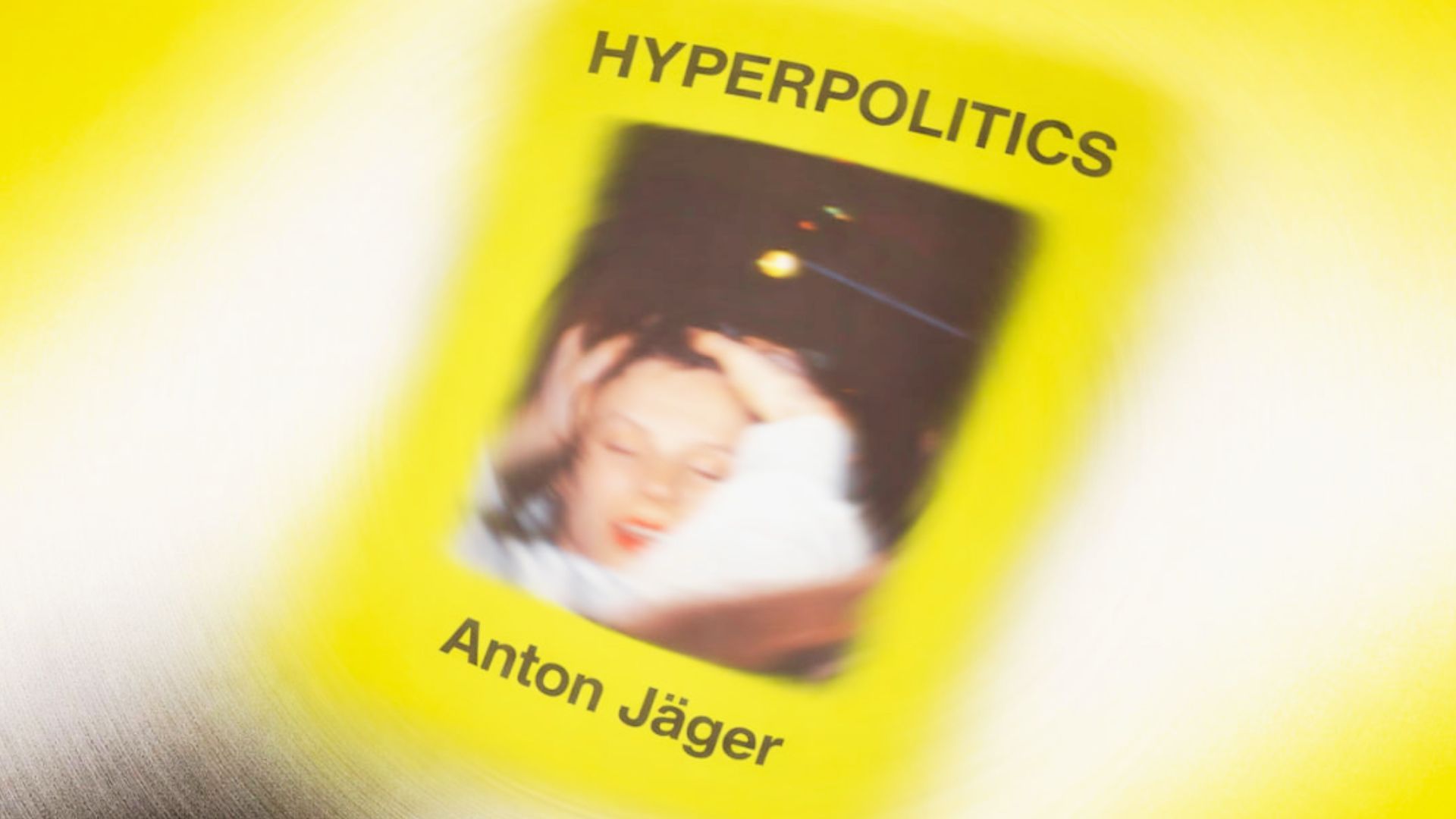
Upon the release of his new book Hyperpolitics: Extreme Politicization Without Political Consequences, September sat down with historian of political thought Anton Jäger to discuss the rise of the new right, the dynamics of politicization in contemporary Western societies, and what the current historical moment demands from the left.
Anton Pravednikov: Let me start with some general questions. In one podcast you went on, a striking example of hyperpolitics was mentioned: an Instagram post from the time of BLM protests — one that reads: "The refusal to post online is often inherently racist." Let's start by clarifying the concept. What can we call hyperpolitics? Could you explain to our readers what you mean by the term, and had it been used before you explored it in your work?
Anton Jäger: The concept is not originally mine — I did not invent the term in a very strict technical sense. I think I used it for the first time in 2021 or 2022. At the time, it was meant very casually, with no real philosophical depth to it. But the person who, in fact, introduced the concept into social science discussions was the German philosopher Peter Sloterdijk. He wrote a book in 1994 that strictly treats the term hyperpolitics. It was only afterwards, when I read the book and began talking about it with my editor in German, that I realized there was some overlap between our arguments. The way I'm deploying it is slightly different: to describe a change in political culture, particularly in the Organisation for Economic Co-operation and Development (OECD) world, in the last 10 to 15 years.
I say the OECD world because this is mainly a story about the West, or what Branko Milanovic calls "the political West". I don't want to claim this only applies to the West — my problem is simply that my knowledge of other areas, whether the post-Soviet space, the non-Western world, or the Asian context, is too limited to make more comfortable pronouncements. I restrict myself to the European and American cases, and I'm very glad when others take up the concept and find applications in their own non-Western settings. At the same time, what it is mainly trying to describe is repoliticization — an increase in political activity in the last decade.
This repoliticisation can seem very anecdotal or almost atmospheric; it can just be about the ‘vibes’, as they say nowadays. But if you look at what's happening online, it's clear that the costs of political expression have been reduced quite dramatically — not in terms of censorship, but in terms of the sheer ease of making a political statement or declaring a political allegiance. Before, you might have needed access to a newspaper, a public square, or the ability to circulate flyers. Now, there is a new digital public sphere in which declaring political preferences has become much easier. That's obviously the online side of the story, but there's also a quantitative element. If you look at the data on electoral turnout, on protests, and even on political violence, particularly in the US, there has been a remarkable resurgence in the last 10 to 15 years. The Black Lives Matter protests of 2020 were the largest in American history — over 20 million people participated. There was a record turnout for the 2020 and 2024 elections; the number of Americans who voted is comparable only to 1904. In Europe, you can see very similar trends, even if the picture is not homogeneous.
Inversely, what the concept of hyperpolitics tries to do is to move against the idea that we can compare the contemporary period to the 1920s and 1930s. The analogy is quite logical insofar as a lot of the political energy released in the last 10 to 15 years does seem to benefit the far right — not just electorally, but also culturally and politically. Far-right parties are now in power, I think, in about one-third of European countries, or in some kind of coalition agreement. So, the comparison with the interwar period seems logical. Where I'm more hesitant is that there is one other indicator pointing in a very different direction: what the book calls de-institutionalization. The rise in political activity has been spectacular, but it has gone hand in hand with a continued decline in organized political life. Parties keep losing members, and unions have become weaker. The institutional context in which politics usually happens — the only context available in the 1920s and 1930s — has not returned. In fact, it has experienced an accelerated decline.
The concept of hyperpolitics thus allows us to ask: what does it mean to have this scissor-shaped development? On the one hand, political activity is on the rise; on the other, institutional affiliation is in decline. That is very different from the 1990s and 2000s, when both axes were going downwards. Yet it is also very different from the mid-20th century, when political activity could be high but always had a clear institutional form. Today, I think we live in a period without a real precedent: a high degree of politicization facilitated by the internet, combined with a low degree of institutional affiliation. It is this new situation that the book anatomises — where it comes from, what its roots are — and at the end it provides an assessment of the promises and limits of this new form.
AP: So, as I understand it, this concept of hyperpolitics is deeply connected with the previous phase of «post-politics», which began with the dissolution of the USSR and the end of the Cold War. Did the period of hyperpolitics begin after the 2008 crisis? If simplified, the reason is that people began to realize the technocrats were incapable of solving problems and wanted to return to politics, but they found only an empty space — the kind that Peter Mair wrote about in his book Ruling the Void. Is that right?
AJ: Correct. Peter Mair was a massive source of inspiration for this book, and I think he provides one of the best analyses of that so-called post-political era in the 1990s and 2000s. And 2008 provides a very clear cutoff point for when the period of protest begins. Some people have described the 2010s as the decade of protest. There is a renowned book by the American journalist Vincent Bevins, «If We Burn», that makes this case very explicit — he even cites data suggesting that the 2010s were the period in human history in which people protested the most, ever. A daring claim, but one that can indicate the scale of the increase in political activity.
2008 shreds the social contract — not just in Europe or the US, but across the world. It is very much also a global story. If you want to talk about the effects it had on the Putin regime, for example, 2008 is clearly a cutoff point. The same holds for North Africa with the Arab Spring and for China. A lot of Chinese history after 2008 is centrally determined by that event. What 2008 does is create massive pressure on the social compact that was signed in the 1990s and 2000s, and people begin to realize they want to contest the austerity measures being imposed.
I think they gain insight into two things. First, existing political institutions and parties are either unresponsive or actively hostile to their demands — the party system has been cordoned off from popular pressure. Second, and this is not just about the electoral system but about the state itself, there has been a transfer of power mainly to unelected and technocratic bodies. So even if the parties would be responsive, they don't have any power. It is this double realization that invites the hyperpolitical wave, because you want to find a way of expressing yourself politically and pushing through your demands, but you see that the existing institutional landscape no longer responds to that. And the state itself has insulated itself against this pressure.
This institutional blockage also explains why politics takes the form of protest politics across most of the 2010s. The first wave of protest after 2009–2010 is indeed openly anti-institutional. If you look at Occupy Wall Street or the Arab Spring, it's not very clear what the institutional infrastructure is; some are actively hostile to institutions. But then, in the early 2010s, both on the right and the left, there was an attempted institution-building usually described as populism. What makes it different from the later hyperpolitics is precisely that there is an institutional horizon: you found a party, the party participates in elections, it might even try to create some kind of civil society. Both on the right and the left, there is an attempt to translate the political energy into an institutional channel.
In the second half of the 2010s, particularly on the left, it becomes very clear that building these new institutions is going to be either very difficult or ineffective. That explains why there is a second breath to the first wave of protests. After 2008, you have an explosion of protest, then an institutional wave, and then again a return to protest tactics precisely because institution-building has proven so difficult.
You can clearly see this shift: the Indignados had the claim "they don't represent us," which implies a counterclaim — let's build something that can represent us. There's still a striving towards representation, and once there is that ambition, institutions are implied. But if you look at the Yellow Vests, or some of the later movements in the 2010s and early 2020s, the idea is no longer "they don't represent us" but "we don't want to be represented at all." Anyone within the Yellow Vest movement who claims a mandate to speak is treated as intrinsically suspicious — someone trying to betray the movement. This means you can have enormously impressive protest movements that refuse any institutional horizon. Those are the two trajectories the book tries to describe: the first explosion of protest and an attempted institution-building captured in the concept of populism, and then the second breath of the protest movements in the late 2010s and early 2020s.
AP: One of my questions was about the connection between populism and hyperpolitics, but I think you've already addressed that. In Russia, among my colleagues, many know you primarily through your book on populism, and I understand that this research was what pushed you to think more about the political moment you call hyperpolitics.
You mentioned that people tend to draw comparisons between the present and the interbellum because of the rise of the far right. I have two related questions. First, why has hyperpolitics been more beneficial to the far right than the far left? And second, sociologist Dylan Riley has written that civil society was highly institutionalized in pre-fascist countries like Italy, and that fascism rose precisely because of this very robust civil society. Yet today, civil society is in poor shape, and we still seem to see similar consequences — a rise of the far right, as in the interbellum. How do you explain that?
AJ: Two very important questions that the book does address, though I should note that history moves very fast in the 2020s, and one constantly has to test the theory against recent developments. So why does it seem as if the hyperpolitical tendencies of the 2010s and 2020s have proven more beneficial to the right than the left?
I think there's one basic asymmetry one always needs to be aware of: in a capitalist society, the benchmark for political success is much lower on the right than on the left. The right does not tend to set itself ambitious goals of social change in the way the left does. It sees itself as serving a stabilizing function — sometimes counter-revolutionary, but mainly stabilizing — and its aims are not as threatening to established interests. That sounds banal, but it matters. Salvini can make all kinds of wild claims about leaving the euro or stopping migration, and then walk back on those promises very easily without being punished electorally, because that's not why people vote for the right. By contrast, Syriza or Podemos get elected on a promise to end austerity — a very high benchmark.
The second point is access to private funds. There is a capacity to draw on certain established fractions of capital that is much more spontaneous on the right than on the left. If Elon Musk sponsors a march in London for Reform UK, or the Front National in France can appeal to wealthy millionaire donors, it indicates a donor base for far-right activity that is much deeper and larger than anything the left can find. The original socialist movement was specific in that it didn't rely on charity to finance campaigns — it had to have members through unions or parties who would pay dues. That is much less of a necessity on the far right, because private money can substitute for mass membership contributions.
I also think there is a question of political discipline. The right has a kind of capacity for unity and has proved more capable at certain types of institution-building. It has been more careful about not purely embracing a digital approach and has seen the necessity of maintaining some cadre. If you look at Italy, the Lega Nord, there is a clear sense that they've recognized that building mass organizations is a better guarantee of success.
At the same time, hyperpolitics is also a problem for the right. If you want to carry out the more ambitious parts of your program — a serious deportation strategy, major political-economic reforms, making Europe an independent strategic actor — you need a mass infrastructure to make that work. And that is not something the right has proven especially successful at either. That's also why I think even Trump and some of these other regimes are, in the end, quite weak. Meloni is a great example: she comes from a party with a direct genealogical link to Mussolini. At the same time, to say that her administration has set itself the same goals as the fascist regime of the 1920s and 1930s would be ludicrous. She has accommodated herself to the European Union and even become a darling of Brussels.
That brings us to Riley's point. He has written about "civic authoritarianism" — the interwar fascism that was built on a very strong associational basis. The parts of Italy richest in associations were actually the most likely to lurch to the far right. And the difficulty today is precisely that the far right has not found a substitute that could launch a similar civic renaissance. In the US, there is now an ambition to use ICE and certain security forces as a potential launching pad for a new civic authoritarianism. ICE has access to state funds, and people can be paid very well working for immigration enforcement. But it's unclear whether ICE will become anything like the SS or the Squadristi of the 1920s, formations that had a prehistory in the army and came out of the experience of the First World War. With ICE, there has been the war on terror and various military operations, but it's not very clear that you can get the kind of Freikorps or paramilitary formations that fascism had in the 1920s and 1930s out of the ICE squadrons.
The situation with Minneapolis is telling in this regard. A brutal, aggressive deportation regime is being rolled out — the numbers are now higher than under Biden or Obama. But the fact that they've now removed Greg Bovino, the very controversial official, and that there is now an attempt at damage control, suggests it's not entirely clear if they'll be able to extend the apparatus. It may radicalize further — I don't want to rule that out. But as a whole, it looks like quite an incoherent operation, and I'm skeptical of the idea that ICE could serve as the launching pad for a Riley-style civic authoritarianism.
AP: When you were talking about civic authoritarianism, I remembered the work of Cihan Tuğal on the strong party organization of the Erdoğan regime. Is it possible for the European far right to build something comparable in Europe?
AJ: It's not impossible. I certainly don't think it's off the cards — a lot of far-right parties have been attempting to do this. I don't think it's the task of social science to make confident predictions. What's interesting about politics is that it's about freedom, and that's also why people should engage with it. It could happen, and it could be that in the coming years the right does find the recipe for that civic foundation. I'm simply indicating some structural limits that make it difficult.
In the last 10 to 15 years, the objective limits on this kind of renaissance have been quite stark. But I think there are exceptions. The Turkish case is interesting. The Indian case is also very interesting: the BJP does appear to have a mass organization — I think it's the largest political party in the world — and this does seem to approach the civic authoritarianism of the 1920s and 1930s in a meaningful way.
On the question of whether Trump is a fascist: I certainly think there are people in his entourage who hold ideas about the racial composition of the United States that approach 20th-century fascism. That is undeniable. But fascism was not just an intellectual movement; it was also a social, political, and military movement. The idea that Trumpism has somehow built out the same kind of party infrastructure that the Italians and Germans managed to construct — that I simply don't see. If you look at the Republican Party's structure and its relationship to its base, there is no real rapport. It's not even really a party; it's more like a ministry, or, as some call it, a casino for private donors. What Trump has done is make that bidding hall for private donors his personal domain. But 20th-century mass parties were not bidding halls — they were different institutions. If it turns out, in five years, that the right has found the formula for that civic renaissance, then I will say my thesis has been falsified, and we will need to look more seriously at an analogy with the 1930s.
AP: My next question is more theoretical, and it comes out of discussions I've had with students and colleagues about your work. It's about what we might call the erosion of civic life. You write about a K-shaped recovery where the significance of the public sphere increases but the erosion of civic life continues. Is civil society necessary for political action to have real consequences? In Russia, when we talk about civil society, we often think of NGOs. For many of my students, it's not clear why we need deeply rooted, grassroots civil society. You have a great metaphor I often use — about the difference between mass politics and hyperpolitics — where you talk about the pins, the badges of associations, that protesters in the 1960s wore on their clothes, compared to today, when someone comes to a BLM protest with perhaps some ideological pins but no affiliation to any labor union or organization. So why is it so important to be part of these alliances, these connections, this civil society, in order to have real political consequences?
AJ: The contrast I draw between the 1960s and the 2020s is recognisable when you look at pictures of the March on Washington: almost everyone is there in their capacity as a member of a specific organization, wearing the badges, as you said. You can see this contrast very clearly in Belgium between trade union marches — where everyone comes in jackets or carrying flags that indicate their membership of a specific union — and, let's say, a Palestine Solidarity March, where organizers explicitly ask people not to wear those indications. They say: "Come in red on Sunday, but don't come with your union jacket, don't come with your party flag." They ask this because they don't want to be seen as associated with any specific political setting; they want to universalize, to make the protest seem as broad as possible. There are arguments for this, of course, but the contrast between the two modes is very stark.
Now, I wouldn't say that association-building is strictly necessary for social change — that's too strong. There are obviously cases where it hasn't proven necessary. My point is more: what are the dominant methods of changing a given power balance? The first is what Eric Hobsbawm called "collective bargaining by riot." In the 19th century, before there were organized parties, riots and property damage were a very prominent way of achieving social reform — look at the Great Reform Act in Britain in 1832, which was preceded by agricultural riots, petitioning, and massive marches. So, it's not as if that type of protest activity has no effect. The issue is that it's very difficult to sustain campaigns over a longer period of time through this modality. Hyperpolitics has a very short lifespan. If you're pursuing a social project that involves planning over a longer period, it's not clear how you keep on protesting indefinitely. That's precisely why Podemos decided to launch itself as a political party: the indignados cannot continue indefinitely. People have to go back to work. They will vacate the squares at some point. So, the aim was to translate the protest into something more durable because it operates on a different timescale.
The other dominant mode of achieving social change is elite pressure — finding certain fractions of the elite that have an interest in your social project and cultivating them as a constituency. That's not an ineffective tactic. But the problem on the left is that if you're interested in a project ambitious enough to threaten elite interests across the board, it's very unlikely you'll be able to exercise effective elite pressure. Elite pressure is easier to do on the right than on the left.
The third is institution-building. Sometimes people seem to think my argument is essentially a Tocquevillean: that the decline of civic association has led to political instability, and that to restabilize the political order, we need to reinvent those associations. That is the conservative civic argument — mass democracy needs top-down, hierarchical institutions to discipline an unruly populace. There's something to be said for it; increasing political volatility does go hand in hand with the decline of right-wing mass parties.
But there's a difference between making an argument for institutions as a source of stability and making an argument for institutions as a precondition for sustained social change. If you want to turn protest into actual social change, you need some kind of institutional infrastructure to mediate and extend it. This is a very basic Leninist point. If you read Lenin against the Narodniks and the anarchist currents, the argument is that the party gives consciousness to what remains a purely instinctive phase of revolt. To make something more concentrated, and therefore more powerful, you need institutional infrastructure. What I'm saying is Marxism 101: the moment that a revolt can become a revolution is precisely through the institutional infrastructure that can maintain it. That's not a claim that it's the only way of achieving social change. But based on the historical record, I think it's the most effective one. It is more difficult nowadays, but unfortunately, there's very little else, because both elite pressure and collective bargaining by riot have shown themselves to be rather unreliable strategies.
AP: It would be very interesting to talk about the structural position of the middle class and intelligentsia here. You may have read Lilian Cicerchia's article, which is inspired by your research. She writes about the importance of the structural position of the middle class in hyperpolitics — that its members build careers in NGOs and academia. Could it be said that hyperpolitics is, if not a class project of the middle-class intelligentsia, then at least something from which they are among the main beneficiaries? And how might that change, if it's connected to hyperpolitics?
AJ: Yes, I very much like that article and I agree with her application and extension of the thesis. One of the responses to the book is that it's not sociologically specific enough — that all political forms, and hyperpolitics in particular, are class-coded, or carry a specific class content. Describing it as a class project, though, I think is too strong. I think that is something along the lines of what Liliana says, but to me, that attributes too much agency to a class that simply isn't organized enough to act as one.
Tendentially, yes: factions of the middle class or the intermediate class find their way into hyperpolitics more easily, partly because it's a question of time preferences — they simply have more time to familiarize themselves with political content, more time to spend on Twitter and Instagram. They enjoy a benefit within the new digital public sphere. If you look at the data on who is on Twitter, it very clearly shows a bias towards certain social classes. But that's not the same as a class project, which would require a class-for-itself consciously pursuing an agenda. That I don't see here.
At the same time, these hyperpolitical modes do appeal more to that class fraction, partly because they're more digitally connected, and because — as you say — this genre of engagement does seem to offer a certain type of moral capital within specific career circuits. If you aspire to a career in the NGO sector or in academia, it becomes clear that certain political credentials help. Now, I think there are all kinds of insipid right-wing theories obsessing over this — the entire discourse around wokeness largely revolves around this question. But I do think there is a kernel of truth: a certain political cachet or ideological commitment will benefit you in certain sectors of the contemporary nonprofit or third sector. Hyperpolitics here is, at least partly, part of the career politics of the third sector.
But there's an ambiguity here, because a lot of hyperpolitical campaigning throughout the 2010s has backfired quite spectacularly. If you look at the crackdown on universities by the Trump administration, or what in Germany is called the Radikalenerlass — the hunt for radicals — it can have severe side effects. The same intelligentsia and middle class that thought this political engagement was an asset can now see it as a risk. The repressive response to this kind of engagement can be very fierce. And yes, what the right calls the "woke backlash" can partly be explained as a hostile response by certain factions of the right towards the career politics of the third sector, which tends to overlap with these hyperpolitical dynamics.
AP: This next question is connected to what we've been discussing, because it's about media — also traditionally a professional space for the intelligentsia and middle class. After Trump won in 2024, many people on the left decided they needed their own version of Joe Rogan — that they needed this kind of podcaster to win the cultural war and, with it, the next elections. But I think you would argue that's not the right idea, and that the alternative is building a class-based movement. Can we see a return to class politics? And what do you think would be the effective structure for this — a new party, a new political movement? Can you name any projects in Europe today that you think are worth paying attention to?
AJ: I don't think having a Joe Rogan for the left is necessarily a bad idea — I'm not opposed to it as such. There's just a question of priorities and resources. The contemporary alternative media circuit really does have a lot of ideological influence: more people in the US now listen to podcasts than watch the evening news. In Europe, the shift is less dramatic, but the US is often a distant mirror for these developments. The cultural weight of these formats is becoming crucial and vacating that space entirely is indeed dangerous.
The problem isn't the idea itself — it's treating it as the main strategy. Because the question is: what kind of relationship do people have with their podcast host? Is a subscriber the same as a party member? Is subscribing to a show the same as getting a membership card? It is hard to see how it is. If Joe Rogan were to say, "Go to Washington and burn down Congress tomorrow," maybe a small section of followers would agree, but I very much doubt he has the capacity to discipline most of his millions of followers. The kind of accountability and command structure that a subscriber model offers is very different from what can be built within an institution. A subscriber is not a member. You can believe that people don't want to be members anymore in the 2020s — fine. But then at least accept that you cannot demand the same things of them as you can of a membership base.
What you see with the most successful political outfits on the left in Europe is that they usually combine both elements: a core of militants and a solid membership base, alongside a podcast circle aimed at people who don't necessarily want to join the party but might vote for them. That's fair. But it's not a good idea to say that winning a podcast race alone will win the political battle. The smartest approach is a hybrid — combining a classical organizational model with digital outreach.
On the boring but necessary answer: yes, a mass party with democratic centralist principles and a clear distinction between inside and outside is needed. I think everything Kautsky and Lenin said in the formative years still applies, with obvious questions of anachronism. The Belgian Workers' Party is a really interesting case. I'm not a member, but I know many people in the party. They're a product of the 1970s — a complicated period within my own chronology — but they've evolved into a kind of concentric party that operates at different speeds. They have a core that functions almost like a church militant, of people who dedicate their entire lives to the party and give away half their wages, mainly parliamentary salaries, with very strict rules and genuine internal debate, followed by a party line that members present publicly. One weakness I see is that they've inherited one of the worst features of 1920s Bolshevism: the ban on internal factions. That ban was a civil war measure, and Trotsky later had deep misgivings about it, as did Kautsky; I think Lenin himself felt very uneasy about it. The ban on internal factions was almost certainly a mistake, because it removes internal opposition. But beyond that core, the party also has outer circuits of more loosely connected members — people who don't have a full-time commitment but who can be mobilized around a specific campaign on Palestine or asked to knock on doors during elections. More passive members, but still people with some kind of connection to the party. I think that's a sensible model for today.
If you look at Zohran Mamdani's win in New York, one sees a similarly hybrid element: door-knocking alongside massive digital outreach. Anyone with a sense of political strategy will be familiar with this already. As for Podemos, I don't think it was uninteresting, but they went for a party structure quite atypical for the left because they were afraid of becoming a left-wing sect. And now we can clearly see that Podemos no longer exists as an independent force. They have not survived the electoral cycles and have essentially become an appendage of the Socialist Party — the very force they once sought to replace. That is more of an argument for a more traditional party structure, because without it, you're very sensitive to political mood swings and risk disintegrating.
The experiment is happening on the right, too. Reform UK is now growing rapidly in membership — they've launched neighborhood groups and pub groups, trying to become a genuine party with members rather than just a business corporation. The smartest people on the right know that constructing parties is the only way to do this seriously. Though there is always the perennial temptation: if you can get a large sum from Elon Musk or anyone else, maybe you don't need mass party-building at all. You can simply do patronage instead. The right remains very vulnerable to that temptation, because you can still be quite successful even without building a mass membership organization.
AP: I think it's great to be pointing to specific examples like the Belgian Workers' Party, because one of the main questions for the left is always how to organize ourselves in this political environment. When we shift from Europe to the United States, in your 2024 article on hyperpolitics in America, you characterized American politics as a "stabilization by inertia," drawing on Baudrillard. Does that still hold true two years on? Or do you see important changes? Or is it more that the K-shaped dynamic has simply continued and perhaps intensified?
AJ: The article is now included as a preface in the English edition of the book, which is a risky move, because it contains predictive claims that might sound a bit contentious now. I think it's held up well enough, and I don't want to do too much self-promotion here.
Trump 2.0 is obviously very different from Trump 1.0 — we are dealing with a more institutionalized Trumpism. But the ambiguity hasn't gone away. The question of whether ICE can become the basis of a civic authoritarianism, the idea that they can somehow reverse American decline on a global scale, the idea that they can blow up the globalization of the 1990s and restore a more America-centric order — all that remains highly ambiguous. I don't think there's been much of a qualitative break. Trumpism is a lot of theatrics; it's a 24-hour performance that can sometimes have very deadly and massive consequences. The Maduro kidnapping, I think, is a perfect encapsulation of their method: not real regime change, not a serious plan to get China out of Latin America or restore American supremacy in the hemisphere. It's almost an acupunctural operation that satisfies Trump's perennial need for exciting episodes in the television show that is his presidency. When Debord wrote about the society of the spectacle in the 1960s, I don't think he quite knew what was coming. It has now taking on a metastatic quality.
There has been some radicalization, some qualitative leaps in certain areas — the ICE-method is an open question. For the rest, I'm willing to stand by most of those predictions. They are always risky, and you always end up looking somewhat foolish. I did make some at the end of the piece, and that was my mistake — though I don't entirely regret it, because I don't think they're that far off.
As Adorno makes clear in his writing on far-right authoritarianism, there's also a ceding of agency in predictions that he finds damaging. The question "what will happen?" is a question you ask when you don't feel in control of a situation. It is a purely speculative question. But if you believe you can influence a situation, you don't need predictions — you decide what happens tomorrow. That's why this speculative mode in social science is, I think, also quite anti-political: it doesn't presuppose any capacity for agency.
AP: In Russia, independent participants of political discourse have been quite obsessed with predictions, and we have a lot of memes about the failed forecasts that appeared after the war started — the Russian economy will collapse in three months, and so on. I think it's very hard for social scientists to avoid the question of predictions entirely, though.
Perhaps for a final question: because we're speaking ahead of your book's release in English [the interview was conducted in early February, 2026 — ed.], could you tell us which issues you raised in earlier articles does the book clarify or develop further? And maybe — forgive me if this sounds blunt — why should people read the book rather than just the articles?
AJ: An excellent question. If you can read all the articles for free, why would you buy the book? I’d say the book is much more systematic. It's a general-audience work rather than a strict social science thesis — more of an essay, with some literary ambition as well, so hopefully it's pleasant to read. But at the same time, the book is far more than a collection of articles. It systematizes the argument, and what is truly crucial — and what isn't in the articles — is the historical material: the collection of testimonies and evidence from the 20th century that draws these contrasts. A lot of effort went into presenting that historical material in such a way that it ties together, and that's something you simply can't get from the articles.
That said, if you're genuinely short on cash and unable to buy it, yes — the central argument is still there in the articles. But the book does add something very significant. Now I'll say something explicitly promotional: the book looks very beautiful. They did a really good job on the graphic design. It's a genuinely nice aesthetic object. If you put it on your shelf, it will look just fine there.